
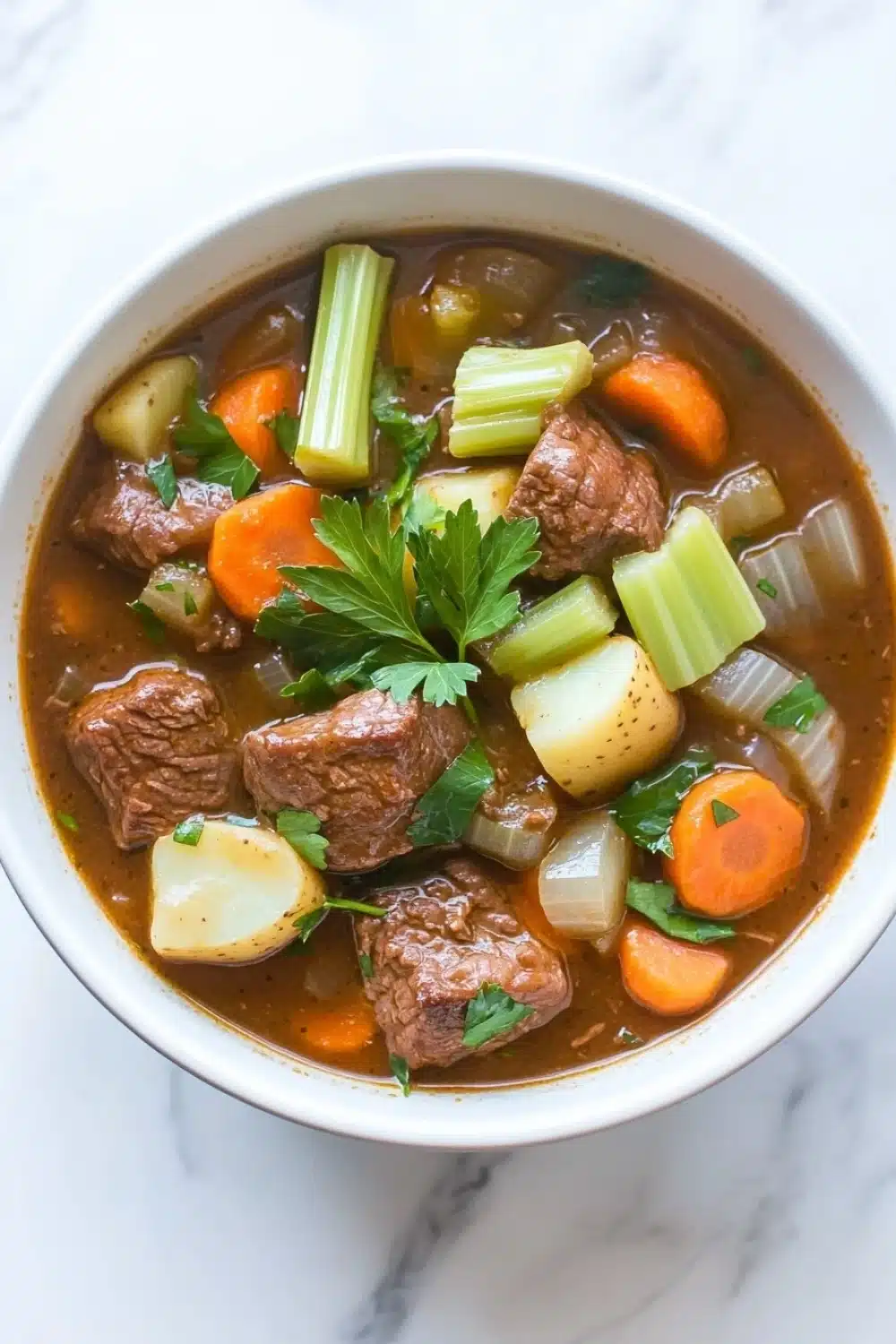
There’s something about the slow simmer of a good beef stew that turns an ordinary kitchen into a cozy haven. I remember the first time I tossed those flour-dusted beef chunks into the slow cooker—there was this no-nonsense, old school vibe that just spoke of Sunday dinners and family stories around the table. The air thickened with the earthy aroma of browned meat mingled with the sweetness of caramelized onions and garlic—seriously, that smell could bring anyone to their knees. While the stew bubbles away for hours, you get this perfect gap to unwind, maybe crack a cold one or leaf through a dog-eared cookbook. Using thyme, rosemary, and bay leaves isn’t just about seasoning; it’s about layering memories into the broth. When the clock finally hits eight hours and you lift the lid, that rich, hearty concoction—with tender beef, melt-in-your-mouth potatoes, and carrots—is the kind of stick-to-your-ribs meal that doesn’t mess around. No shortcuts, no fancy fluff—just old-fashioned, slow-cooked goodness that hits the spot every single time. Trust me, once you’ve got this in your dinner rotation, you’ll wonder how you ever got by without it.
If you love the convenience of a slow cooker but want to try something with a bit more hands-on cooking, check out our Hearty Beef Stew with Skillet Beef Stew Meat: Rustic Comfort in a Bowl for a delicious twist on classic comfort food.
Real-Life Wins from Slow Cooker Old Fashioned Beef Stew
- Hands-off magic—set it and forget it while you crush your to-do list, then come back to a house smelling like you’ve spent hours in the kitchen.
- Big batch brilliance—feeds a crowd or gives you next-day leftovers that taste even better, because let’s face it, stew always improves overnight.
- Comfort food that’s forgiving—throw all your root veggies together with beef and herbs, and the slow cooker does the heavy lifting on flavor and tenderness.
- Flexible timing—start it in the morning or let it simmer overnight on low, perfect for busy folks who can’t babysit a pot on the stove.
- Minimal cleanup—one slow cooker, one skillet for browning, and you’re done. No mess, no stress, just good grub ready when you are.
Slow Cooker Old Fashioned Beef Stew
Total Time: 8 hours 20 minutes
Yield: 6
Description
A classic, hearty slow cooker beef stew with tender chunks of beef, potatoes, carrots, and onions simmered in a rich, savory broth. Perfect for a comforting meal any day of the week.
Ingredients
2 pounds beef chuck, cut into 1-inch cubes
2 tablespoons all-purpose flour
1 teaspoon salt
1/2 teaspoon black pepper
2 tablespoons vegetable oil
4 cups beef broth
1 cup water
2 tablespoons tomato paste
1 tablespoon Worcestershire sauce
2 medium onions, chopped
4 cloves garlic, minced
4 large carrots, peeled and cut into 1-inch pieces
4 medium potatoes, peeled and cut into 1-inch cubes
2 stalks celery, sliced
1 teaspoon dried thyme
1 teaspoon dried rosemary
2 bay leaves
1/4 cup fresh parsley, chopped
Instructions
In a large bowl, combine flour, salt, and black pepper. Add beef cubes and toss to coat evenly.
Heat vegetable oil in a large skillet over medium-high heat. Add coated beef cubes in batches and brown on all sides, about 5 minutes per batch. Transfer browned beef to the slow cooker.
In the same skillet, add chopped onions and garlic. Sauté for 3-4 minutes until softened. Transfer to the slow cooker.
Add beef broth, water, tomato paste, and Worcestershire sauce to the slow cooker. Stir to combine.
Add carrots, potatoes, celery, dried thyme, dried rosemary, and bay leaves to the slow cooker. Stir gently to mix all ingredients.
Cover and cook on low for 8 hours or on high for 4-5 hours, until beef is tender and vegetables are cooked through.
Remove bay leaves. Stir in chopped fresh parsley before serving.
- Prep Time: 20 minutes
- Cook Time: 8 hours
Explore more:
Dinner Recipes
Slow Cooker Old Fashioned Beef Stew
Substitution Secrets
Not got beef chuck on hand? No sweat. I’ve swapped in brisket or even short ribs when the butcher’s shelf was looking bare — they pack serious flavor and the slow cooker turns them into melt-in-your-mouth goodness. If you’re steering clear of beef, go for lamb shoulder; it’s a bit gamier but cozy and rich, fitting the stew’s vibe. Vegetables? Potatoes are pretty nailed down here, but if you’re feeling frisky, sweet potatoes add a hint of sweetness that plays well with the tomato paste. No celery? Try fennel stalks for that subtle anise note — it’s a curveball that works surprisingly well. Worcestershire sauce is a linchpin, but if you’re out, soy sauce plus a splash of balsamic vinegar can mimic that umami punch. Just remember, little tweaks can tilt the whole stew’s personality, so taste as you go!
The Science
Here’s the scoop on what’s happening when you slow cook beef stew: collagen, the connective tissue in beef chuck, breaks down over low heat and long time, turning tough muscle into tender, succulent bites. That’s the magic behind the 8-hour low setting. Flour coating? It’s not just about dusting—flour helps develop a crust on the meat during browning, sealing in juices, and also thickens the broth later, giving your stew that luscious body without adding extra steps. Onions and garlic sautéed first wake up flavor molecules and release sugars, lending a deeper, rounded taste to the broth — it’s a subtle science trick that makes a world of difference. Herbs like thyme and rosemary release essential oils slowly, infusing the stew without overpowering it. And don’t sleep on bay leaves — they’re like the quiet background singer who holds the whole tune together.
Real-world Fix
Once, I got a frantic call from a friend who’d let his stew simmer too long—overcooked beyond tender to mushy. Here’s the fix: pull the meat and veggies out gently, then reduce the broth on high heat in a pan to concentrate flavors and thicken it up. If the stew feels thin or watered down, a slurry of flour or cornstarch mixed with cold water stirred in can save it, but add it gradually to avoid a gluey mess. Don’t rush reheating; blast it and you’ll chew rubber. Low and slow on the stovetop or microwave at a medium power setting is the way to go. Sometimes, a dash more salt or a sprinkle of fresh herbs right before serving wakes the whole pot back up. And if you’re short on time next go-round, toss everything in a pressure cooker — you’ll snag tender results in an hour flat.
Slow Cooker Old Fashioned Beef Stew FAQ
Can I skip browning the beef first?
You can, but I’d say don’t skip it. Browning the beef adds serious depth—no shortcuts here if you want that rich, meaty punch.
What if I don’t have Worcestershire sauce on hand?
Substitute with a splash of soy sauce or a bit of balsamic vinegar. It won’t be exactly the same, but it’ll keep the umami vibe going strong.
Can I use different veggies in this stew?
Totally! Swap or add parsnips, turnips, or even mushrooms if you’re feeling adventurous. Just keep the chunk size similar so everything cooks evenly.
How do I make this stew thicker?
If the broth feels too thin, stir in a cornstarch slurry (1 tbsp cornstarch mixed with 2 tbsp cold water) about 15 minutes before serving. That’ll give it a nice body without turning it into glue.
Is it okay to cook on high instead of low?
You can crank it on high for 4-5 hours if you’re in a rush, but the low-and-slow method is where this stew really shines—tender beef and melded flavors that make you wanna lick the bowl.