
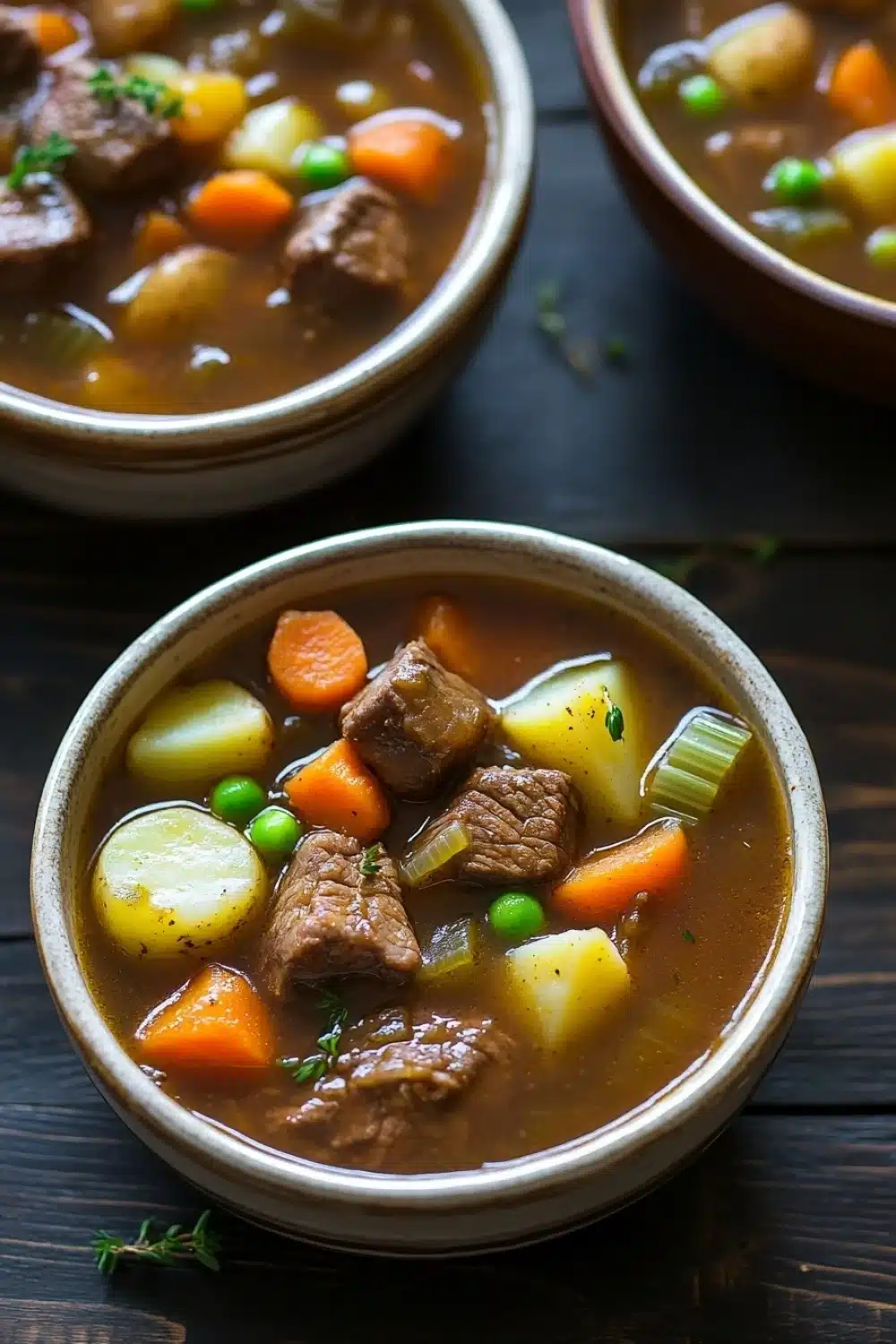
There’s something about the way a good beef stew fills the kitchen with that deep, meaty aroma—it’s pure home comfort in the making. I remember the first time I browned skillet beef stew meat in a heavy pan, the sizzle and pop sending promises of rich flavors ahead. Browning the meat right is the game changer; it locks in that juicy goodness and builds a crust that turns the stew from okay to downright unforgettable. As the onions and garlic mingle in the pot, releasing their sweet, savory notes, the anticipation builds. Toss in the robust mix of beef broth, red wine, and herbs, and the whole kitchen takes on a cozy, almost hypnotic vibe. Simmering low and slow—patience is key here—softens the meat and melds the flavors into a thick, hearty hug of pure satisfaction. Chunky carrots, tender potatoes, and a splash of peas add that perfect pop of color and texture, making every spoonful a little treasure. When the stew finally hits the table, steam rising in lazy curls, it’s the kind of meal that sinks right into your bones and your soul. No frills, just honest, stick-to-your-ribs goodness that reminds you why some dishes become staples in our lives.
If you’re a fan of beef stew with skillet beef stew meat, you’re going to love this cozy recipe too. When the chill hits, One Pot Beef Potatoes feels just like a warm hug. Check it out here and get ready to warm up your meal game!
Why Beef Stew with Skillet Beef Stew Meat Is a Game-Changer for Your Weeknight Dinners
- Hands-off simmering: Once you brown the meat and toss everything into the pot, the stew pretty much cooks itself. Perfect for when you want a tasty meal without babysitting the stove.
- One-pot wonder: No need to juggle multiple pans. This recipe keeps the mess manageable—dishwashers will thank you later.
- Flavor jackpot: Browning the beef builds that deep, meaty crust—aka fond—that dissolves into the broth, giving your stew that punch of umami that keeps everyone coming back for seconds.
- Flexible fridge friend: Leftovers taste even better the next day as the flavors marry, making it prime for batch cooking and saving time on busy days.
- Veggie-packed comfort: Carrots, potatoes, celery, and peas add texture and natural sweetness, turning this stew into a one-stop meal that’s easy to love—even picky eaters can’t knock it.
Beef Stew with Skillet Beef Stew Meat
Total Time: 2 hours
Yield: 6
Description
A hearty and comforting beef stew made with tender skillet beef stew meat, simmered with vegetables in a rich, flavorful broth. Perfect for a cozy meal any day of the week.
Ingredients
2 pounds skillet beef stew meat, cut into 1-inch cubes
2 tablespoons vegetable oil
1 large yellow onion, diced
3 cloves garlic, minced
4 cups beef broth
1 cup dry red wine
2 tablespoons tomato paste
2 teaspoons Worcestershire sauce
1 teaspoon dried thyme
1 teaspoon dried rosemary
2 bay leaves
4 large carrots, peeled and cut into 1-inch pieces
3 medium potatoes, peeled and cut into 1-inch cubes
2 stalks celery, sliced
1 cup frozen peas
Salt, to taste
Black pepper, to taste
2 tablespoons all-purpose flour
2 tablespoons cold water
Instructions
Heat the vegetable oil in a large heavy-bottomed pot or Dutch oven over medium-high heat.
Add the skillet beef stew meat in batches, making sure not to overcrowd the pot, and brown on all sides, about 5 minutes per batch. Remove the browned meat and set aside.
In the same pot, add the diced onion and cook until softened and translucent, about 5 minutes.
Add the minced garlic and cook for 1 minute until fragrant.
Return the browned beef to the pot. Stir in the tomato paste and cook for 2 minutes.
Pour in the beef broth and red wine, scraping the bottom of the pot to release any browned bits.
Add Worcestershire sauce, dried thyme, dried rosemary, and bay leaves. Stir to combine.
Bring the mixture to a boil, then reduce heat to low, cover, and simmer for 1 hour.
After 1 hour, add the carrots, potatoes, and celery to the pot. Cover and continue to simmer for another 40 minutes, or until the vegetables and beef are tender.
In a small bowl, whisk together the all-purpose flour and cold water until smooth to create a slurry.
Stir the slurry into the stew and cook uncovered for 5-10 minutes until the stew thickens.
Add the frozen peas and cook for an additional 5 minutes.
Remove bay leaves. Season the stew with salt and black pepper to taste.
Serve hot and enjoy your hearty beef stew.
- Prep Time: 20 minutes
- Cook Time: 1 hour 40 minutes
Explore more:
Dinner Recipes
Beef Stew with Skillet Beef Stew Meat: Substitution Secrets, Science, and Real-World Fixes
Substitution Secrets
Sometimes, the kitchen gods don’t hand you skillet beef stew meat on a silver platter. No worries—I’ve learned a few tricks while hustling through countless stew nights. Chuck roast is your best friend here: cut it into 1-inch cubes, and you’re in the same ballpark. If you’re feeling adventurous or want a leaner bite, try stew meat from bottom round or even brisket. Just watch your simmer time; brisket needs a bit longer to become pull-apart tender.
For the veggies, carrots and potatoes are classics, but rutabagas or parsnips can add an unexpected earthiness. If you’re out of dry red wine, toss in extra beef broth with a splash of balsamic vinegar or a bit of grape juice to mimic that depth. Remember, Worcestershire sauce is more than a condiment—it’s a secret weapon. If you lack it, soy sauce mixed with a touch of anchovy paste or even a dab of miso paste can bring similar umami vibes.
The Science
Here’s where things get geeky (in the best way). Browning the beef meat—known as the Maillard reaction—is your ticket to rich, complex flavors. It’s not just about color; those browned bits stuck to the pot bottom—fond, in chef speak—are flavor gold. Scraping them up when adding liquids builds layers of taste.
Then there’s the slow simmer. Collagen in the beef breaks down into gelatin, giving the stew that luscious mouthfeel that clings to your spoon. That’s why rushing it won’t cut it. The flour-water slurry at the end? It’s your humble thickener, designed to evenly distribute starch without clumping, giving the stew body without turning it gluey. Trust me, whisk it smooth and add it gradually—no one wants a lumpy mess.
Real-world Fix
One time, mid-stew, I realized I was short on broth and wine. Panic? Nah. I topped off the pot with water, then cranked up the herbs—extra thyme and rosemary—and a dash more Worcestershire. The stew still came out banging. Lesson? Don’t sweat the small stuff. You can’t always control every ingredient, but you can adjust seasoning to keep your stew on point.
Another pro tip: when adding potatoes, make sure they’re cut evenly to avoid half-mushy, half-hard chunks. And always add peas last—those little green jewels cook quick and keep their snap if you’re not reckless. Finally, when reheating leftovers, add a splash of broth or water. Stew thickens overnight, so a little dilution brings it back to the right consistency without losing flavor.
Beef Stew with Skillet Beef Stew Meat: Your Burning Questions Answered
Beef Stew with Skillet Beef Stew Meat: Your Burning Questions Answered
- Can I skip the red wine or substitute it with something else?
- Absolutely! If you’re not into wine or don’t have any on hand, beef broth or grape juice mixed with a splash of vinegar can do the trick. The wine adds depth, but you won’t wreck the flavor without it.
- Why do you brown the beef in batches instead of all at once?
- Good question! Overcrowding the pot traps steam, which means your meat will stew instead of searing. Brown the beef in batches so you get that tasty crust—think of it as the flavor jackpot.
- Is there a way to thicken the stew without flour?
- Sure thing. You could mash some of the cooked potatoes into the broth, or toss in a handful of instant mashed potato flakes. Cornstarch slurry works, too, but you’ll want to add it near the end to avoid cloudiness.
- Can I make this stew in a slow cooker instead of on the stove?
- Yep! Brown the beef first (don’t skip this step, trust me), then dump everything into the slow cooker. Cook on low for 7-8 hours or high for 4-5 hours. Add peas right at the end so they stay bright and fresh.
- How do I prevent the carrots and potatoes from turning mushy?
- Timing is everything here. Adding those veggies after the beef has simmered for an hour lets everything cook evenly. If you toss them in too early, it’s a mush-fest waiting to happen.