
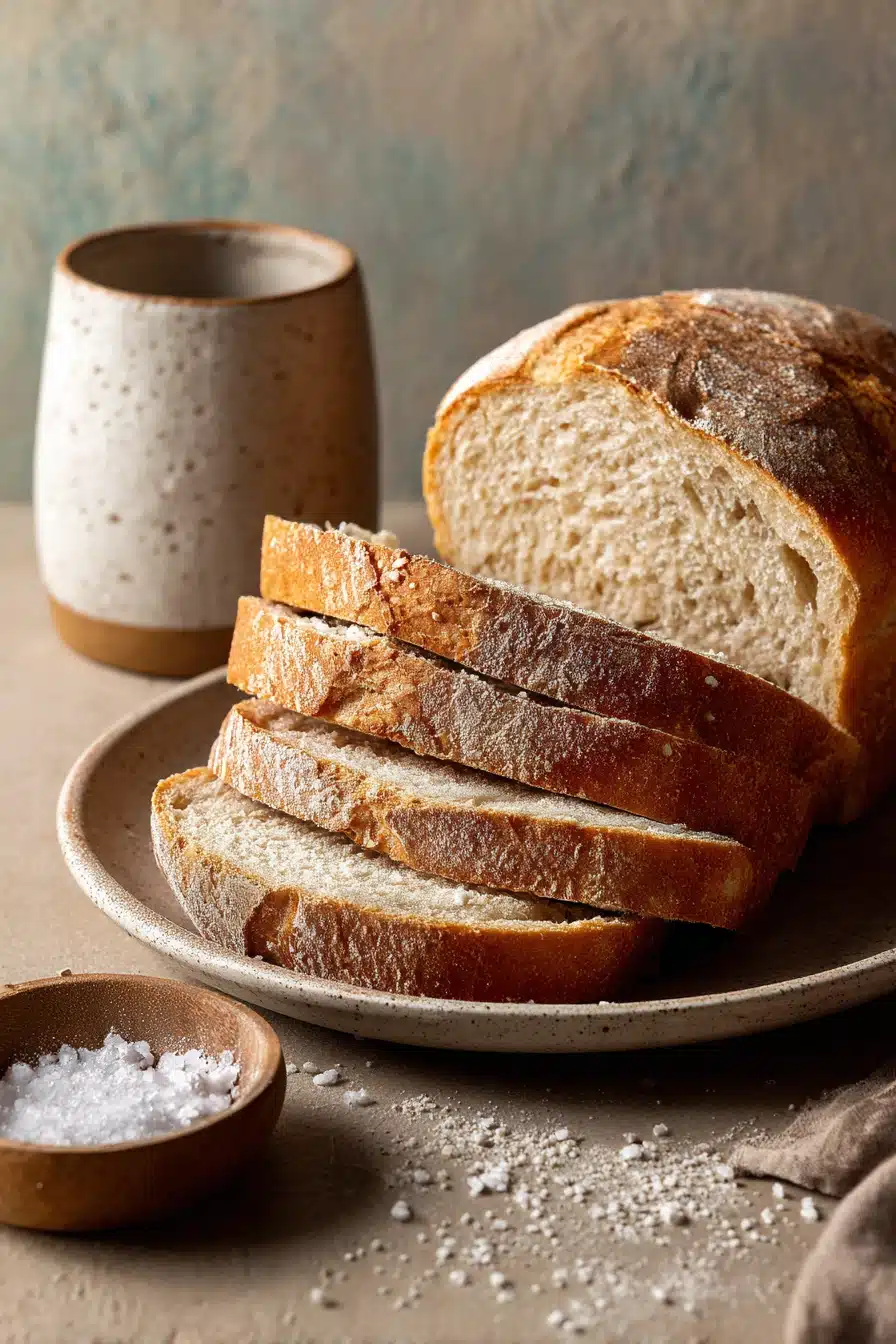
There’s something quietly satisfying about pulling a freshly baked loaf from the oven, especially when it’s basic bread made with bread flour. I remember the first time I tried this recipe—it was one of those slow afternoons where the kitchen smelled like yeast and warmth, and I almost forgot about the time while shaping the dough. The flour dusted my hands unevenly, and I realized I’d left the timer off for the first rise. But that unplanned wait only made the anticipation sweeter. When I finally sliced into that loaf, the crust had that perfect golden snap, and the inside was soft yet chewy, like it was hugging the air itself. Eating that bread plain, just slightly warm, was like a little victory I didn’t expect that day.
That moment—where the world slows down enough to appreciate something as humble as bread—is why this recipe matters. It’s not fancy or complicated, but it feels like home.
Why You’ll Love It
- This recipe nails the chewy texture thanks to the bread flour, but it’s still forgiving if your kneading isn’t perfect.
- The crust comes out just right, not too hard, not too soft—great for sandwiches or toast, though it won’t hold up to a heavy stew without getting a bit soggy.
- It’s simple—and that’s kind of the point. No weird ingredients or complicated steps.
- Making it fills your kitchen with that warm, inviting aroma that’s impossible to resist.
- It takes a bit of time to rise properly, so plan ahead, but the hands-on work is minimal.
If you’re new to bread baking, this recipe is a gentle introduction that offers rewarding results without too much fuss. Even if you’ve only got a little experience, you’ll find it approachable and satisfying.
Print
Basic Bread Using Bread Flour
- Total Time: 2 hours 15 minutes
- Yield: 8 slices
Description
A simple and classic homemade bread recipe made with bread flour for a chewy texture and perfect crust. Ideal for sandwiches, toast, or enjoying fresh from the oven.
Ingredients
3 1/2 cups bread flour
1 1/4 cups warm water (about 110°F)
2 1/4 teaspoons active dry yeast (1 packet)
1 tablespoon granulated sugar
2 teaspoons salt
1 tablespoon olive oil
Instructions
In a small bowl, combine the warm water, sugar, and active dry yeast. Stir gently and let sit for 5-10 minutes until the mixture is foamy.
In a large mixing bowl, combine the bread flour and salt.
Make a well in the center of the flour mixture and pour in the yeast mixture and olive oil.
Using a wooden spoon or your hands, mix until a rough dough forms.
Turn the dough out onto a lightly floured surface and knead for about 8-10 minutes until the dough is smooth and elastic.
Place the dough in a lightly oiled bowl, cover with a clean kitchen towel or plastic wrap, and let it rise in a warm place for about 1 hour, or until doubled in size.
Punch down the risen dough to release air bubbles and shape it into a loaf.
Place the shaped dough into a greased 9×5 inch loaf pan and cover again. Let it rise for another 30 minutes until it puffs up above the rim of the pan.
Preheat the oven to 375°F (190°C).
Bake the bread for 25-30 minutes until the crust is golden brown and the loaf sounds hollow when tapped.
Remove the bread from the oven and let it cool in the pan for 10 minutes.
Transfer the bread to a wire rack to cool completely before slicing.
- Prep Time: 15 minutes
- Cook Time: 30 minutes
Kitchen Notes: You won’t need anything fancy to get started—just a sturdy bowl and a loaf pan will do. When it’s time to serve, I like to slice it thick for sandwiches but also toasted with a pat of butter for breakfast. Sometimes, I barely wait for it to cool and end up with a slightly squished slice, which isn’t ideal but tastes just as good! For a few variations, you could try adding herbs like rosemary or a sprinkle of seeds on top, though I haven’t tested those as thoroughly. A quick swap to whole wheat flour might work, but expect the texture to change a bit. And if you’re feeling playful, a swirl of cinnamon sugar inside could be a nice twist.
FAQ
Can I use all-purpose flour instead? You can, but the texture will be softer and less chewy than with bread flour.
How do I know when the bread is done? Look for a golden crust and a hollow sound when tapping the bottom of the loaf.
Can I freeze the bread? Absolutely. Slice it first and freeze in a bag—toast slices directly from frozen for convenience.
What if my dough doesn’t rise? Make sure your yeast is fresh and your water is warm but not hot. Sometimes the kitchen temperature affects rising times, so be patient.
This bread is a quiet kind of magic—something simple you can make your own. So why not roll up your sleeves and see what happens?