
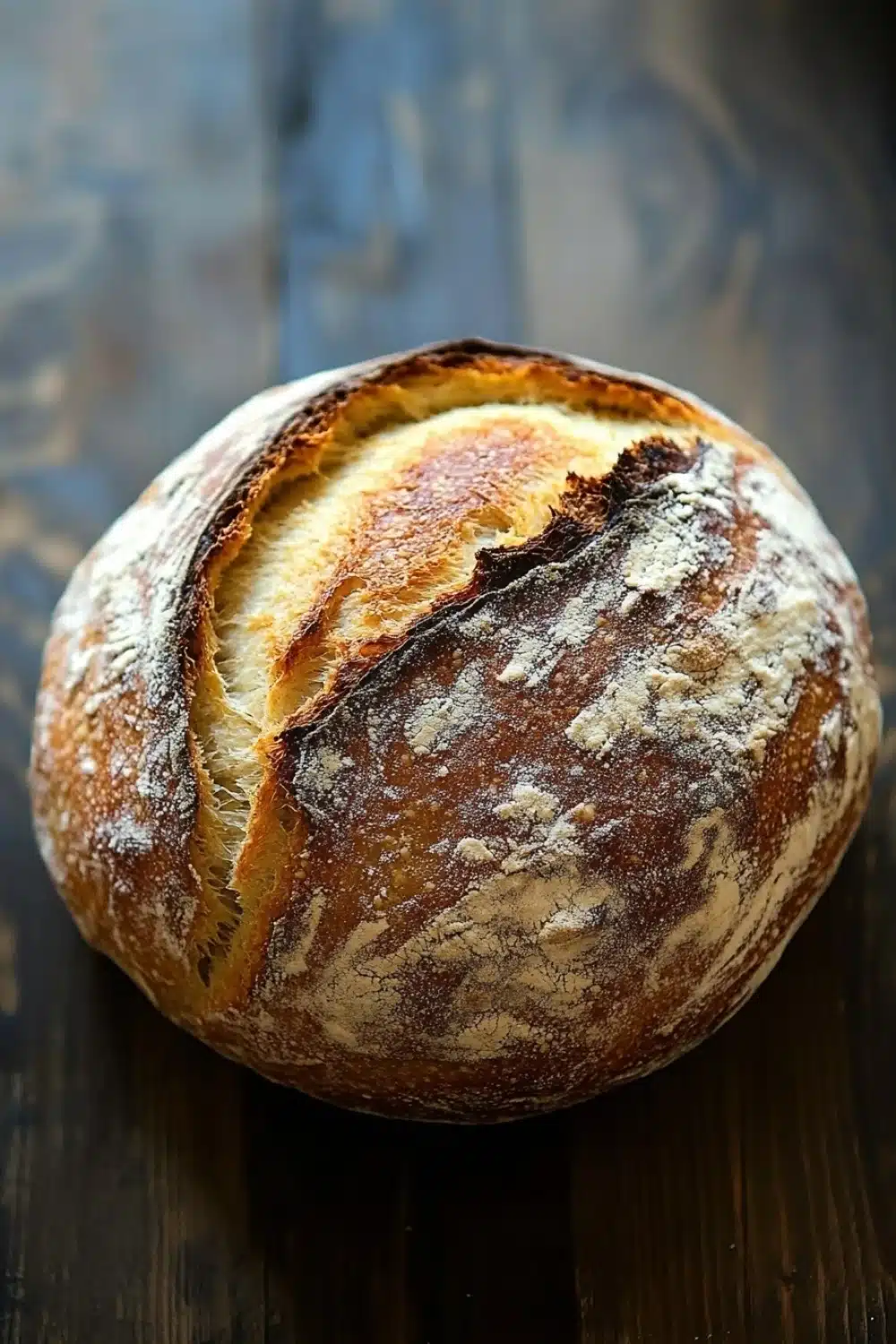
Crusty bread? Not today.
There’s something magical about the hum of an oven preheating—like a secret handshake between you and the kitchen. Today, I’m diving into a recipe where time isn’t the villain. Using self-rising flour means no waiting for yeast to do its slow dance. Instead, you get a soft, pillowy loaf faster than you can say “knead and rest.”
Here’s the kicker: this bread is foolproof, even if you’re not a dough whisperer. The warm water and oil blend into the flour and sugar, creating a dough that’s silky smooth and easy to handle. I remember the first time I tried this—no one in my crew guessed it was made without traditional yeast. It’s that good.
Perfect for sandwiches, toast, or just tearing apart while it’s still warm. This bread doesn’t just fill the belly—it fills the room with that homey, just-baked smell that gets everyone smiling.
If you’re looking to bake delicious bread with self rising flour, mastering the New York Times no-knead bread recipe is a great place to start.
Why This Simple Bread Recipe Works for Real Life
- Ready in just 40 minutes—no yeasty waiting game here.
- Soft, fluffy texture perfect for quick sandwiches when time’s tight.
- Uses pantry staples—self-rising flour means no extra yeast or baking powder hassle.
- Easy cleanup with just one mixing bowl—no need to juggle multiple dishes.
- Great beginner-friendly bread recipe that doesn’t demand fancy equipment or serious dough wrangling skills.

Simple Bread with Self-Rising Flour
- Total Time: 40 minutes
- Yield: 8 slices
Description
A quick and easy bread recipe using self-rising flour that yields a soft and fluffy loaf perfect for sandwiches or toast.
Ingredients
3 cups self-rising flour
1 tablespoon sugar
1 teaspoon salt
1 1/4 cups warm water (about 110°F / 43°C)
2 tablespoons vegetable oil
Instructions
Preheat your oven to 375°F (190°C).
In a large mixing bowl, combine 3 cups of self-rising flour, 1 tablespoon of sugar, and 1 teaspoon of salt. Stir to mix evenly.
Make a well in the center of the dry ingredients and pour in 1 1/4 cups of warm water and 2 tablespoons of vegetable oil.
Stir the mixture with a wooden spoon or spatula until a soft dough forms.
Turn the dough out onto a lightly floured surface and knead gently for about 5 minutes until smooth and elastic. Add a little flour if the dough is too sticky.
Shape the dough into a loaf and place it into a greased 9×5 inch (23×13 cm) loaf pan.
Let the dough rest for 10 minutes to rise slightly while the oven heats.
Bake the bread in the preheated oven for 30 minutes or until the top is golden brown and a toothpick inserted into the center comes out clean.
Remove the bread from the oven and let it cool in the pan for 10 minutes.
Transfer the bread to a wire rack to cool completely before slicing.
- Prep Time: 10 minutes
- Cook Time: 30 minutes
Explore more:
Baking Recipes
Simple Bread with Self-Rising Flour
The Swap That Saves Time and Trouble
Using self-rising flour is like having a secret weapon in your pantry. It cuts out the usual faff of measuring yeast and waiting for it to bubble up into life. This flour already has baking powder and salt mixed in, so you get that gentle rise without the drama. I remember one lazy Saturday when I was craving fresh bread but couldn’t wait for hours—self-rising flour was my go-to move. It’s perfect when you’re pressed for time but still want that soft crumb. If you don’t have it, sure, you can fake it by adding 1 1/2 teaspoons of baking powder and 1/2 teaspoon of salt per cup of all-purpose flour, but why bother when you can grab self-rising and go?
Why That 10-Minute Rest Is Non-Negotiable
Here’s where most rookies get lazy—and it shows. That 10-minute rest after shaping isn’t just a chill-out period for your dough; it’s the magic moment when gluten relaxes, and the dough puffs slightly, giving you a loaf that’s tender yet structured. Skip this and your bread might turn out dense or oddly shaped. Trust me, I’ve been there—rushing to shove the dough in the oven, only to get a brick masquerading as bread. This brief pause lets the dough catch its breath, making the crumb soft and the crust just right. Think of it as the dough’s power nap before the big show.
Rescue Mission: Fixing a Too-Sticky Dough
Sticky dough is the bane of many a baker’s existence. When you knead and your hands feel like they’re wrestling with glue, don’t panic. The immediate instinct might be to dump heaps of flour in, but that’s a rookie trap—too much flour kills the softness you’re after. Instead, sprinkle a little flour at a time while kneading, keeping things light. Sometimes, the humidity or the flour brand can throw you a curveball, so patience is key. If you end up with a dough that’s still sticky but coming together, lightly oil your hands instead of flouring them further—this keeps things manageable without toughening your bread. This technique saved a batch of mine that would have otherwise gone straight to the bin. Sticky dough isn’t a fail—it’s just a sticky wicket you can wrangle with some finesse.
Simple Bread with Self-Rising Flour: FAQs
A1: Not quite a straight swap. Self-rising flour already has baking powder and salt mixed in. If you use regular flour, you’ll need to add those yourself to get the rise—about 1 1/2 tsp baking powder and 1/2 tsp salt per cup of flour.
A2: Nope! This recipe skips yeast entirely. The self-rising flour handles the leavening, making it a quick fix when you don’t want to wait for dough to proof. Perfect for those ‘no-yeast, all-speed’ days.
A3: Look for a golden-brown crust—that’s your first clue. Stick a toothpick or skewer in the center, and if it comes out clean, you’re good to go. If it’s gummy or wet, pop it back in for a few more minutes.
A4: Absolutely! This dough is like a blank canvas—mix in chopped herbs, shredded cheese, or even garlic powder right after combining the wet and dry ingredients. Just don’t overload or it might affect the texture.
A5: Short answer: Yes, but not forever. Store it in an airtight container at room temp for up to 3 days. For a month, freeze it wrapped tight. Thaw fully before slicing to keep it from crumbling.