
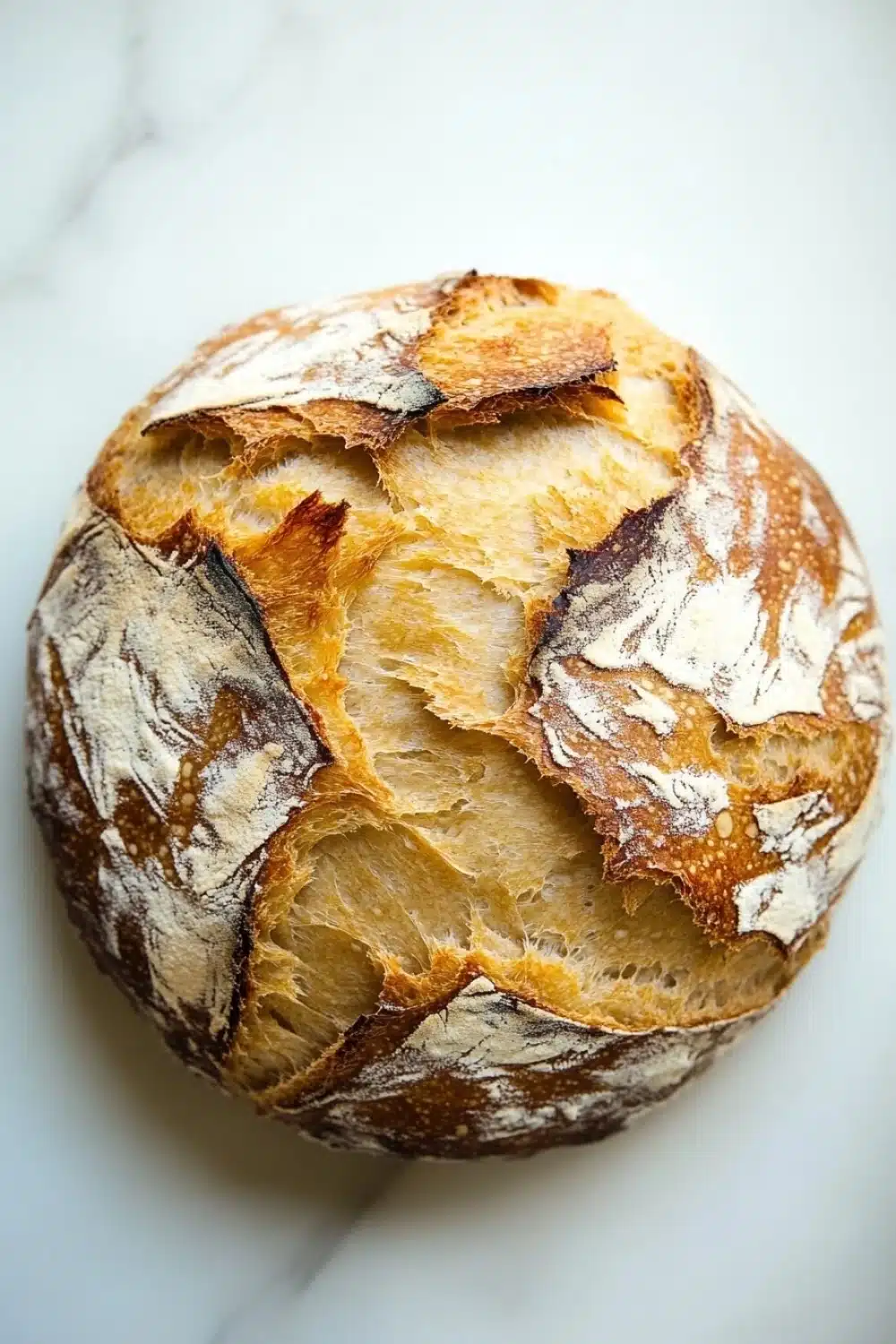
There’s something oddly satisfying about a kitchen bathed in the warm glow of an oven preheating to 450°F. I can almost hear the whispers of that New York Times no-knead bread bubbling away in its Dutch oven cocoon—no elbow grease required, just time and patience. This recipe has been my go-to when I’m craving that perfect crust with a chew that doesn’t quit. The dough feels more like a sticky mess than bread—shaggy, unkempt—but therein lies the charm. You let it ride at room temperature for a good 12 to 18 hours, watching as bubbles appear like tiny blisters promising a crunchy exterior. Then comes the magic: a quick fold, a gentle rise, and into the scorching hot pot. The aroma that fills the air? A total showstopper. No fancy gadgets or proofing boxes—just flour, water, salt, and a pinch of yeast, doing their thing. It’s the kind of bread that’s unapologetically rustic yet surprisingly complex. I call it the “lazy baker’s flex,” because who has time to knead for an hour when you can have a loaf that feels like it took years to perfect? Keep this one in your back pocket for when you want to impress without sweating it.
If you’re in the mood for something sweet after your no knead bread, why not try a Classic Shortbread Cookie Sheet Pan Recipe for Easy Baking and Serving? It’s simple, delicious, and perfect for sharing. Check it out here!
Why This No-Knead Bread Recipe Works Wonders in Real Life
- Hands-off prep: You mix, leave it alone, and come back later—no arm workout required. Perfect for busy folks or lazy bakers like me.
- Long ferment time: That overnight rest isn’t just for show—it boosts flavor and texture without you lifting a finger.
- Crusty exterior meets airy interior: The Dutch oven traps steam, giving you bakery-level crust at home—no fancy gadgets needed.
- Minimal ingredients, max impact: Flour, yeast, salt, water—simple pantry staples that turn into something way above basic.
- Flexible timing: You can let it rise anywhere from 12 to 18 hours, so it fits your schedule, not the other way around.
No-Knead Bread (New York Times)
Total Time: 12 hours 0 minutes
Yield: 1 loaf
Description
A simple and easy no-knead bread recipe popularized by The New York Times. This bread has a crispy crust and a chewy, airy interior, perfect for sandwiches or as a side to any meal.
Ingredients
3 cups (375 grams) all-purpose flour
1/4 teaspoon instant yeast
1 1/4 teaspoons salt
1 5/8 cups (375 milliliters) warm water
Instructions
In a large mixing bowl, combine 3 cups of all-purpose flour, 1/4 teaspoon of instant yeast, and 1 1/4 teaspoons of salt. Stir to combine.
Add 1 5/8 cups of warm water to the dry ingredients and mix with a wooden spoon or spatula until a shaggy, sticky dough forms.
Cover the bowl with plastic wrap or a clean kitchen towel and let the dough rest at room temperature for 12 to 18 hours, until the surface is dotted with bubbles and the dough has doubled in size.
Lightly flour a work surface and place the dough on it. Sprinkle a little flour on top and fold the dough over on itself once or twice. Shape it into a ball.
Place a large piece of parchment paper on a kitchen towel and dust it with flour. Put the dough seam side down on the parchment paper. Cover with another kitchen towel and let it rise for about 1 to 2 hours, until it has nearly doubled.
About 30 minutes before baking, place a 6- to 8-quart heavy covered pot (such as a Dutch oven) in the oven and preheat to 450°F (230°C).
Carefully remove the hot pot from the oven. Lift the dough with the parchment paper and place it into the pot. Cover with the lid and bake for 30 minutes.
Remove the lid and bake for an additional 15 minutes, until the bread is deep golden brown and crusty.
Remove the bread from the pot and let it cool on a wire rack for at least 1 hour before slicing.
- Prep Time: 15 minutes
- Cook Time: 45 minutes
Explore more:
Baking Recipes
Mastering No-Knead Bread: Secrets, Science, and Troubleshooting
Sticky dough can intimidate, but resist the urge to add heaps of extra flour. Lightly flour your surface and hands; the dough should feel wet but manageable. Use a bench scraper if you’re in a sticky situation—it’s a baker’s best friend.
Oven temperature consistency matters too. That Dutch oven gets crazy hot, so preheat it properly (at least 30 minutes). Opening the oven too early kills steam, leaving a pale crust. Also, cool your loaf fully before slicing—cutting too soon turns the crumb gummy.
Lastly, storage isn’t just afterthought—wrap your bread in a paper bag or a clean kitchen towel to keep the crust from softening too fast. Freeze leftovers tightly wrapped to keep the crumb fresh. When you’re ready to chow down, a quick toast brings back that just-baked magic.
No-Knead Bread FAQs
Why does this bread need to rest so long before baking?
The long rest lets the yeast work its magic slowly, developing flavor and giving you that airy crumb without any elbow grease kneading.
Can I speed up the rising time if I’m in a hurry?
Technically, yes—but rushing it means less flavor and a denser loaf. I say, patience pays off in this dough game.
What’s the secret to getting that crispy crust?
That’s all thanks to baking in a preheated Dutch oven. The steam trapped inside crisps the crust beautifully—no fancy tricks needed.
Do I have to use instant yeast or can I use active dry yeast?
Instant yeast is the go-to because it mixes directly without proofing. If you only have active dry, proof it first in warm water to wake it up.
How should I store leftover bread so it doesn’t get stale?
Keep it in a paper bag or bread box at room temp for a day or two. For longer life, toss it in the freezer wrapped tight—just thaw before slicing.