
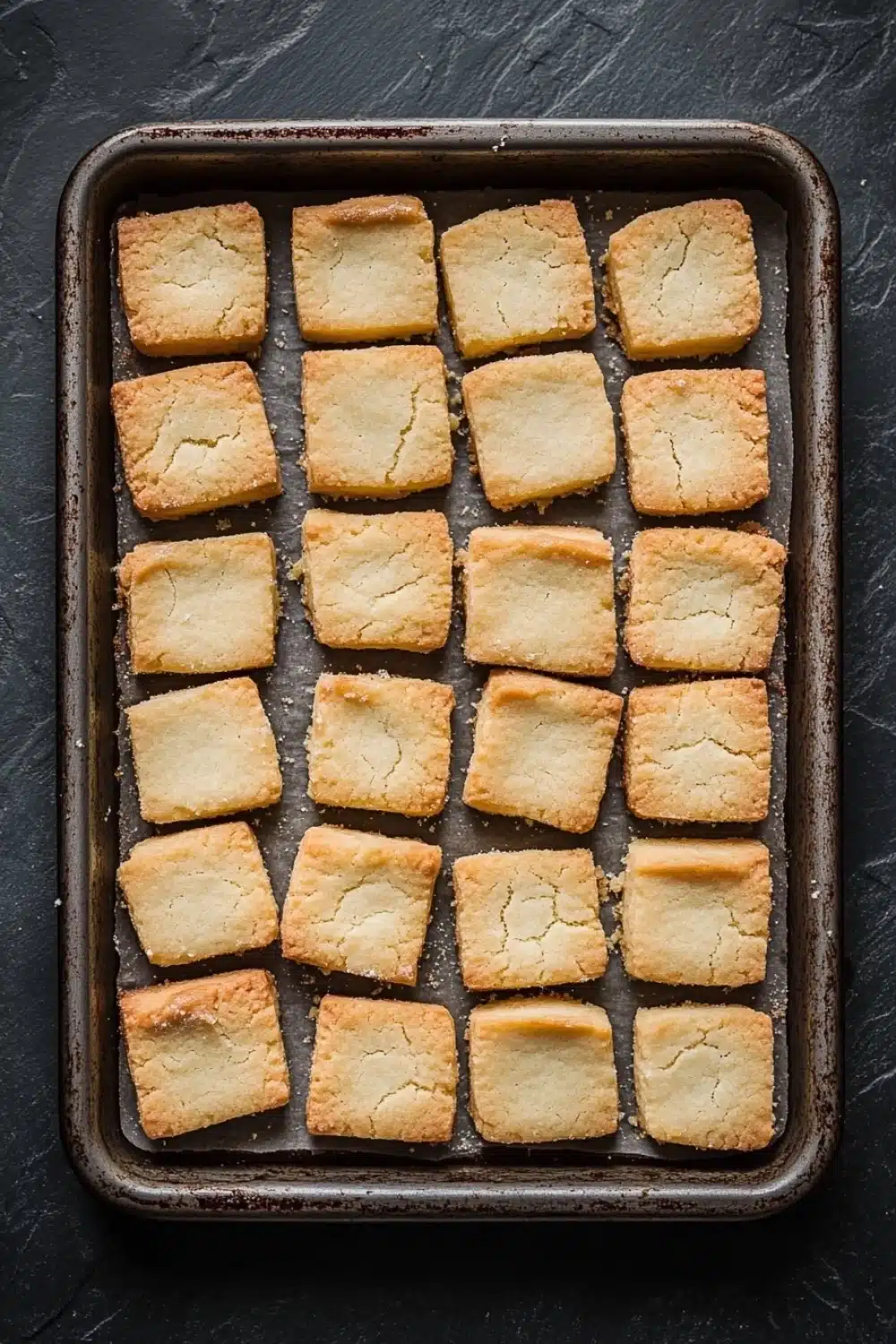
There’s something about the humble shortbread—simple, unpretentious—that always wins me over in the kitchen. I remember the first time I whipped up this sheet-pan version: no fiddly scooping or rolling balls of dough, just one rustic slab of buttery goodness spread out and baked to perfection. The air filled with a cozy warmth, a scent that clings to your sleeves and begs for a nibble even before the timer dings. Using a fork to prick the dough—classic move—helps avoid those pesky bubbles that ruin the smooth surface, making every square cut like a little treasure. This recipe is a no-brainer when you want straightforward, buttery crumbs without the faff. Plus, scoring the warm shortbread right after baking? That’s the secret handshake among old-school bakers, letting the cookies snap apart cleanly once cooled. It’s like the shortcut to homemade charm, with minimal fuss and maximum buttery punch. Next time you crave a sweet but restrained treat, skip the rolling pin and grab a sheet pan. You’ll thank me when you’re dunking these perfectly tender squares into your afternoon tea, all while feeling like you just nailed a classic.
If you’re a fan of quick and satisfying treats, you might want to check out this delightful recipe for a Peanut Butter Chocolate Oatmeal Cookie moment—perfect for those afternoon cravings that just won’t quit!
Why Baking Shortbread in a Sheet Pan Works Wonders
- Easy Portioning: Scoring the dough while warm means every cookie is perfectly sized—no faffing about with cookie scoops or uneven batches.
- Less Mess, More Crunch: Pressing the dough directly into the pan cuts out the fiddly rolling and cutting, so you spend less time with flour-dusted countertops and more time savoring that buttery snap.
- Consistent Baking: The even thickness across the pan keeps every bite uniform—no sad burnt edges or raw middles sneaking in.
- Storage Simplicity: With a batch this size, stash them airtight at room temp for a week or freeze for later—perfect for when you want a quick pick-me-up or an impromptu guest treat.
- Classic Flavor, Minimal Fuss: The straightforward ingredients and method mean even a kitchen rookie can nail this recipe—no need to be a whisk wizard to get buttery, crumbly bliss.
Shortbread Cookie Sheet Pan
Total Time: 45 minutes
Yield: 24 cookies
Description
A classic shortbread cookie recipe baked in a sheet pan for easy slicing and serving. Buttery, tender, and perfectly crumbly, these shortbread cookies are a timeless treat.
Ingredients
2 cups (240 grams) all-purpose flour
1 cup (227 grams) unsalted butter, softened
1/2 cup (100 grams) granulated sugar
1/4 teaspoon salt
1 teaspoon vanilla extract
Instructions
Preheat the oven to 325°F (163°C). Line a 9×13-inch sheet pan with parchment paper, leaving an overhang on the sides for easy removal.
In a large mixing bowl, cream the softened unsalted butter and granulated sugar together using an electric mixer on medium speed until light and fluffy, about 3-4 minutes.
Add the vanilla extract and mix until combined.
In a separate bowl, whisk together the all-purpose flour and salt.
Gradually add the flour mixture to the butter mixture, mixing on low speed until just combined. Do not overmix.
Transfer the dough to the prepared sheet pan. Use your hands or a spatula to press the dough evenly into the pan, smoothing the top.
Using a fork, prick the dough evenly all over to prevent bubbling during baking.
Bake in the preheated oven for 30 minutes, or until the edges are lightly golden but the center is still pale.
Remove from the oven and allow the shortbread to cool in the pan for 10 minutes.
Using a sharp knife, score the shortbread into 24 squares while still warm. Let cool completely in the pan before lifting out using the parchment paper.
Once cooled, separate the squares and store as desired.
- Prep Time: 15 minutes
- Cook Time: 30 minutes
Explore more:
Baking Recipes
Mastering Sheet Pan Shortbread: Tips from the Trenches
Substitution Secrets
Shortbread is a deceptively simple cookie, but swapping ingredients can throw its texture and flavor out of whack faster than you can say “butter me up.” I once tried replacing the all-purpose flour with whole wheat thinking it’d add a rustic edge—big mistake. The dough turned gritty, and the final product was dense and crumbly in the wrong way. If you’re looking to tweak the flour, maybe try cake flour for a tender crumb instead. Butter? Don’t mess with the unsalted variety here; salted throws off the salt balance more than you’d expect. And sugar? Granulated is your go-to for that clean sweetness and crisp bite. If you want to add a twist, vanilla extract is your best friend—don’t substitute it with imitation vanilla or you’ll be left with a cheap knockoff flavor. Trust me, the magic in shortbread is butter and sugar locked in a tender, crumbly embrace—don’t go changing the dance partners too much.
The Science
Shortbread’s magic lies in its minimalist composition, which means every element has a starring role. The butter coats the flour’s proteins and starch molecules, limiting gluten development which keeps the cookie tender rather than chewy. This is why overmixing is the kiss of death; you’ll end up activating gluten and turning your shortbread into something more akin to a biscuit. The fork-pricking trick? It’s not just for show—it’s a vent to release steam during baking, preventing those pesky bubbles that ruin the flat, even surface you’re aiming for. Baking at a modest 325°F ensures the butter melts slowly, giving the dough time to set without browning too aggressively. That slight golden edge with a pale center is the signpost of perfectly baked shortbread. It’s a delicate balance—too hot or too long, and you get a greasy or dry mess.
Real-world Fix
Let’s face it, sometimes stuff goes sideways in the kitchen. One afternoon, I found my shortbread dough was a little too crumbly—like it had the personality of a dried-out cracker. Quick fix? I softened a tablespoon of butter and kneaded it in. Instant magic—not too wet, just the right tack. If your cookies spread like they’re on a slip ‘n slide, chances are your butter was too warm or you overmixed. Pop the dough in the fridge for 20 minutes before baking next time to chill those fats and keep your shapes sharp. And if you end up with shortbread that’s borderline rock-hard? Wrap the cookies in a damp paper towel and microwave for 10 seconds to breathe some life back in. Shortbread forgiving? Not always, but a few tricks in your back pocket can save a baking disaster.
Storage Hacks
Storing shortbread might seem straightforward, but a slip-up here can turn your tender cookies into sad little bricks. After cooling, I always stash mine in an airtight container at room temp—never the fridge, unless you like your butter solidified and your cookies tasting like the fridge itself. For longer-term storage, freezing is the way to go, but make sure you use a seal-tight container or heavy-duty freezer bag to avoid freezer burn (that’s the cookie killer). When thawing, patience is your pal—leave them on the counter to come back to life naturally instead of nuking them, which can cause sogginess or uneven texture. Oh, and if you’re packing these for a road trip or gifting, sandwich layers with parchment paper to keep them from clumping together. Trust me, no one wants a cookie crumble mess in their box.
Shortbread Cookie Sheet Pan—Your Top Questions Answered
1. Can I use salted butter instead of unsalted butter?
Sure, but skip or reduce the added salt in the recipe to keep the balance right. Salted butter can throw off the flavor, making the shortbread a bit too salty for some tastes.
2. Why do I need to prick the dough with a fork before baking?
Great question! Those tiny pricks let steam escape so the shortbread bakes evenly without puffing up or developing air bubbles. It’s a little trick to keep the texture spot-on.
3. What’s the best way to cut the cookies without crumbling?
Score the warm shortbread while it’s still soft, then let it cool completely before separating. A sharp knife is your best friend here—press gently but firmly for clean edges.
4. Can I add flavors or mix-ins to this recipe?
While this recipe sticks to the basics, you can toss in lemon zest, cinnamon, or even finely chopped nuts for a spin. Just don’t go overboard—shortbread is all about that simple, buttery vibe.
5. How do I store these cookies to keep them fresh?
Keep them airtight at room temp for a week, or stash them in the freezer if you want to hoard them longer. Thaw naturally—microwaving shortbread is a one-way ticket to soggy town.