
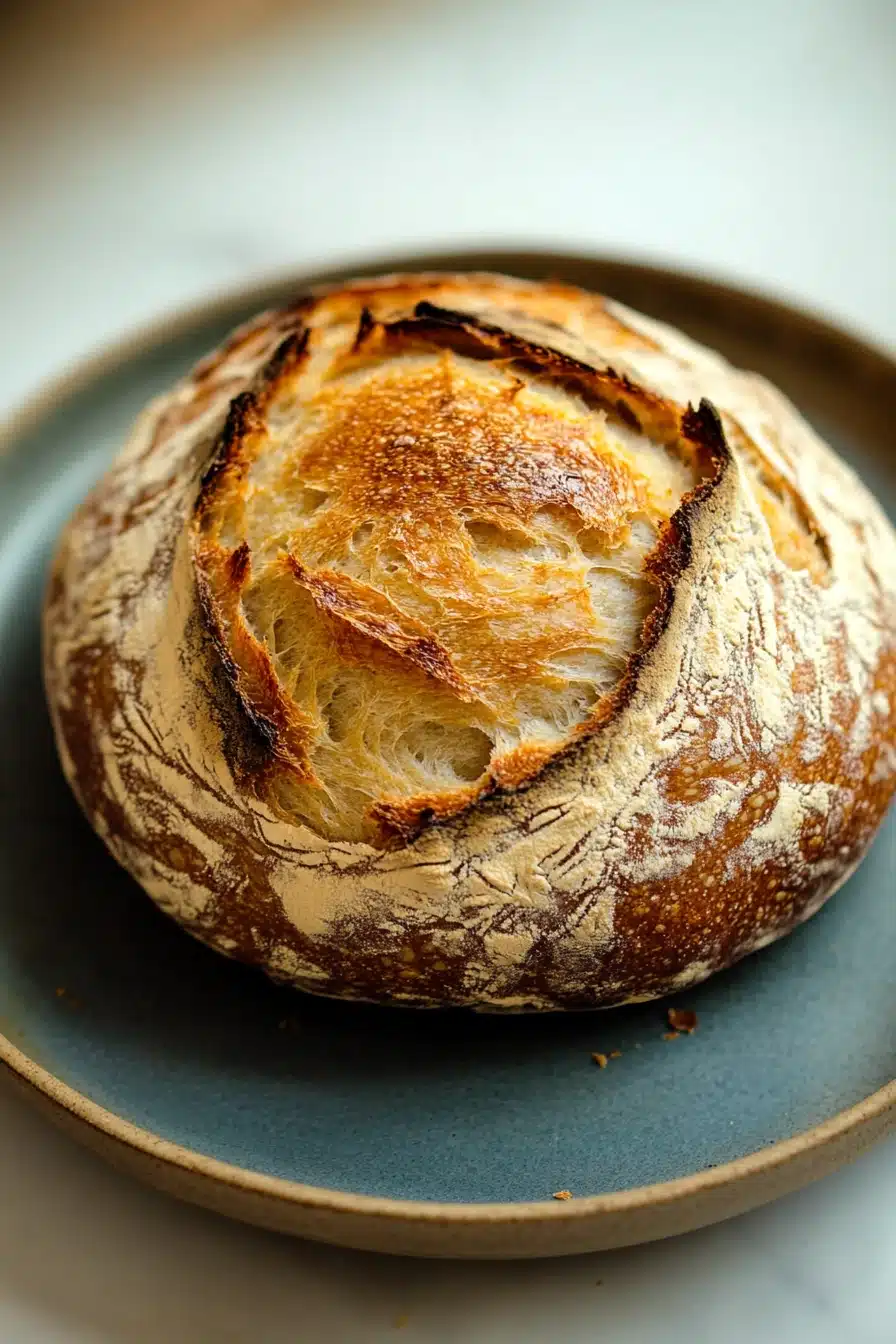
There’s something quietly satisfying about bread that makes itself while you go about your day. This no-knead bread recipe from The New York Times invites you to trust the process, to let time do the work, and to watch a humble dough transform into a golden, crusty loaf that feels like a small, delicious victory.
I remember the first time I tried this recipe. I mixed the flour, yeast, salt, and water in a lazy swirl, barely stirring, then covered the bowl and left it alone. For the next twelve hours, the dough bubbled away, and I kept sneaking peeks, fascinated by those tiny surface bubbles that whispered of rising life. When I finally shaped it and slid it into the oven-warmed Dutch oven, I was a little nervous—would it really turn out? The smell that filled the kitchen as it baked was worth every moment of waiting. The crust crackled as I sliced it, and the crumb was soft and chewy, exactly how I’d hoped. I have to admit, I almost forgot to take a picture before devouring half the loaf.
Why You’ll Love It:
- This bread demands very little hands-on time—just a few minutes to mix and shape, and then you can forget it for most of the day.
- The long fermentation builds rich flavor and an artisan texture without extra effort.
- The crust comes out crisp and crackly, but the inside stays tender and airy—like a bakery loaf without the bakery price.
- It’s simple—and that’s kind of the point. No fancy equipment or techniques, just good ingredients and patience.
- One small tradeoff: you do need to plan ahead because of the long rise, but the payoff makes it worth it.
If you’re worried about timing or temperature, don’t be. This recipe is forgiving, and I usually let the dough sit for somewhere between 12 and 18 hours, depending on my schedule. It still turns out beautifully, even if I’m a little late getting to the oven.
Print
No-Knead Bread (NYTimes)
- Total Time: 18 hours
- Yield: 1 loaf
Description
This no-knead bread recipe from The New York Times yields a crusty, artisan-style loaf with minimal effort. It requires only a few simple ingredients and a long fermentation time to develop flavor and texture, making it perfect for home bakers who want fresh bread without kneading.
Ingredients
3 cups (360 grams) all-purpose flour
1/4 teaspoon instant yeast
1 1/4 teaspoons salt
1 1/2 cups (360 ml) warm water
Instructions
In a large mixing bowl, combine the flour, instant yeast, and salt.
Add the warm water to the dry ingredients and stir with a wooden spoon or spatula until a shaggy, sticky dough forms.
Cover the bowl tightly with plastic wrap or a clean kitchen towel and let the dough rest at room temperature for 12 to 18 hours, until the surface is dotted with bubbles and the dough has doubled in size.
Lightly flour a work surface and turn the dough out onto it. Sprinkle a little flour on top of the dough and fold it over itself once or twice to shape it into a rough ball.
Place a large piece of parchment paper on a kitchen towel and dust it generously with flour. Transfer the dough seam side down onto the parchment paper and cover it with another kitchen towel. Let it rise for 1 to 2 hours until it has nearly doubled in size.
About 30 minutes before the dough is ready, place a heavy covered Dutch oven (or heavy pot with lid) in the oven and preheat to 450°F (230°C).
Carefully remove the hot Dutch oven from the oven. Using the parchment paper, lift the dough and place it into the pot. Cover with the lid and bake for 30 minutes.
Remove the lid and bake for an additional 15 minutes until the bread is deep golden brown and crusty.
Use tongs or a spatula to remove the bread from the pot and transfer it to a wire rack to cool completely before slicing.
- Prep Time: 15 minutes
- Cook Time: 45 minutes
Kitchen Notes:
I use a heavy pot with a lid to mimic the Dutch oven effect, and it works like a charm. You don’t need anything fancy—just something that can hold heat well and has a cover. When serving, I love tearing off chunks and slathering them with butter or dipping into olive oil and balsamic vinegar. Sometimes, I toss in some fresh herbs into the dough for a subtle twist, or add a handful of olives or nuts, though I haven’t experimented enough to say exactly how it changes the texture. You might find it fun to try variations like this on lazy weekends.
FAQ:
Can I use whole wheat flour instead? You can, but the dough might be denser and need a bit more water. I haven’t tested this extensively, so start by substituting half the flour and see how it goes.
What if I forget to bake after the rise? The dough will keep fermenting but might get a bit sour or overproofed. It’s tempting, but try to bake it as soon as it’s ready for the best texture.
Can I freeze the dough? I haven’t tried freezing before baking, but freezing the baked loaf works well and makes for quick future snacks.
Give this no-knead bread a try on your next slow day. The magic of simple ingredients and time is waiting to fill your kitchen with warmth and welcome.